


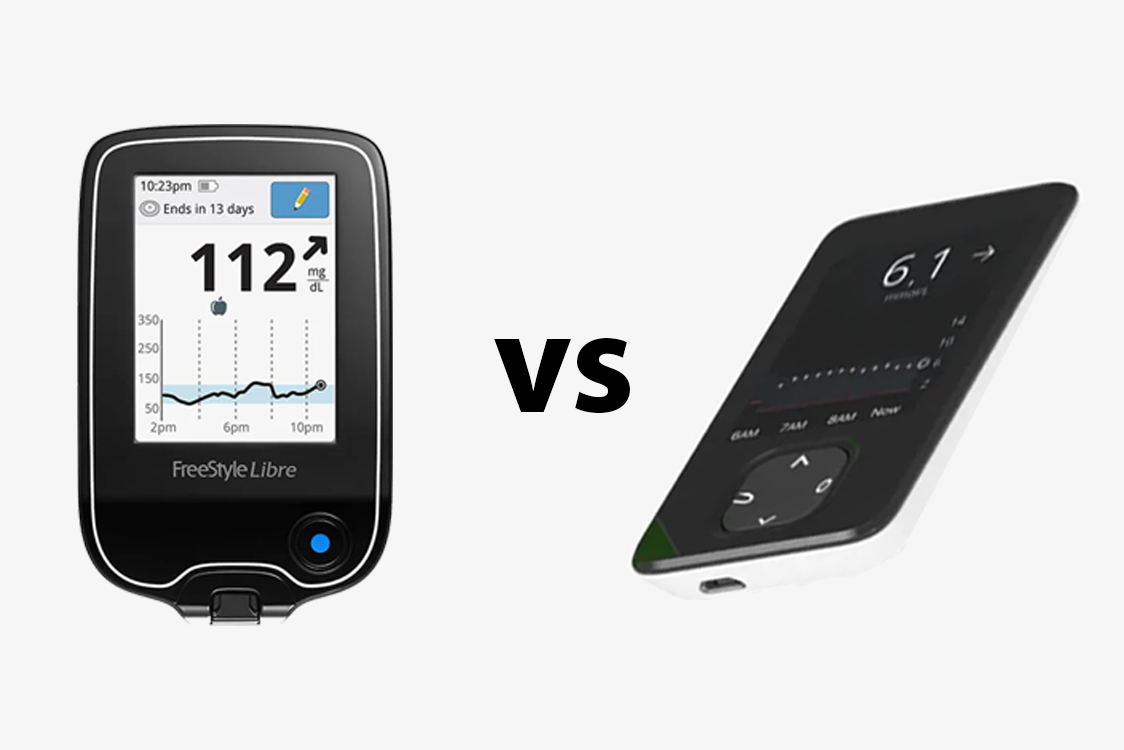
Elegir un monitor continuo de glucosa puede parecer abrumador cuando estás mirando una lista de especificaciones y nombres de marcas que nunca antes habías tenido que considerar. Si ya has reducido tus opciones al Dexcom G7 y al FreeStyle Libre 3, ya estás evaluando dos de los MCG más ampliamente usados y reconocidos disponibles hoy en día. Esta guía explica cómo se comparan en precisión, tiempo de uso, funciones de la aplicación y cobertura del seguro, para que puedas entrar a la conversación con tu proveedor de atención médica sintiéndote preparado.
Dexcom G7 vs. FreeStyle Libre 3: comparación lado a lado
Antes de entrar en los detalles, aquí tienes un resumen rápido de cómo se comparan estos dos dispositivos en las características que más se preguntan. Ten en cuenta que la experiencia individual varía, y tu proveedor puede ayudarte a evaluar qué es lo más importante para tus objetivos de manejo.
| Característica | Dexcom G7 | FreeStyle Libre 3 |
|---|---|---|
| Tiempo de uso del sensor | 10 días | 14 días |
| MARD (métrica de precisión) | ~8.2% (brazo) | ~9.2% |
| Tiempo de calentamiento | 30 minutos | 60 minutos |
| Alertas en tiempo real | Sí (personalizables) | Sí (opcionales) |
| Transmisión continua | Sí | Sí |
| Calibración requerida | Ninguna | Ninguna |
| Opción de receptor | Sí | No (solo teléfono inteligente) |
| Integración con bomba de insulina | Sí (Tandem t:slim X2, Omnipod 5) | Limitada (estado iCGM, en expansión) |
| Compartir datos | Sí (Dexcom Clarity) | Sí (LibreView) |
| Autorizado por la FDA para decisiones de tratamiento | Sí | Sí |
| Sitios de inserción aprobados | Brazo superior, abdomen, glúteo superior (edades 2 a 6) | Solo parte posterior del brazo superior |
El MARD (Diferencia Relativa Absoluta Media, o Mean Absolute Relative Difference en inglés) mide qué tan cerca están las lecturas del MCG de los valores reales de glucosa en sangre. Un porcentaje más bajo refleja una mayor concordancia. Los valores mostrados son cifras publicadas por el fabricante; los resultados en estudios independientes pueden variar.
Precisión, tiempo de uso y lo que muestra la investigación
La precisión es generalmente lo primero que la gente quiere saber al comparar MCG, y vale la pena entender cómo se mide esa precisión. La métrica estándar se llama MARD. Cuanto más bajo sea el número, más cercanas tenderán a estar las lecturas del sensor a los valores reales de glucosa en sangre. Ambos dispositivos tienen puntuaciones de MARD de un solo dígito, lo que los sitúa en el rango considerado clínicamente confiable para decisiones de tratamiento.
El MARD publicado por el fabricante para el Dexcom G7 es de aproximadamente 8.2% para la colocación en el brazo, basado en un estudio clínico de 316 adultos publicado en PubMed Central. El FreeStyle Libre 3 Plus (la versión del sensor Libre 3 disponible actualmente a través de Adapt Health Diabetes) tiene un MARD publicado por el fabricante de aproximadamente 8.2% también, mientras que el Libre 3 estándar se publica en aproximadamente 9.2%. Un estudio comparativo publicado en PubMed Central encontró que el FreeStyle Libre 3 superó al G7 en ciertas condiciones, mientras que los datos de Dexcom muestran ventajas durante cambios rápidos de glucosa. La conclusión honesta es que ambos dispositivos funcionan bien, y la experiencia real varía de persona a persona.
En cuanto al tiempo de uso, la vida útil del sensor de 14 días del Libre 3 tiene una ventaja práctica clara sobre el período de uso de 10 días del G7. Menos cambios de sensor significan menos interrupciones en tu rutina. Dicho esto, el G7 tiene un tiempo de calentamiento notablemente más corto (30 minutos frente a 60 minutos para el Libre 3), lo que importa si estás cambiando sensores antes de una comida o de una parte activa de tu día.
Otra diferencia práctica que vale la pena conocer: el G7 está aprobado para múltiples sitios de inserción (brazo superior, abdomen y glúteo superior para niños más pequeños), mientras que el Libre 3 solo está autorizado por la FDA para la parte posterior del brazo superior. Más sitios aprobados les dan a los usuarios del G7 más flexibilidad para rotar los sitios de colocación y evitar la acumulación de tejido cicatricial con el tiempo.
Experiencia con la aplicación, alertas y compatibilidad con bombas de insulina
Más allá de cómo un MCG mide la glucosa, cómo interactúas con los datos cada día importa igual de bien. Ambos dispositivos ofrecen aplicaciones con vistas de tendencias en tiempo real y compartir datos, pero tienen enfoques bastante diferentes.
La aplicación del Dexcom G7 está construida alrededor de alertas en tiempo real y personalización. Puedes establecer umbrales personalizados para glucosa alta y baja, ajustar con qué frecuencia el sistema te alerta y compartir datos en vivo con hasta 10 seguidores a través de Dexcom Clarity. El G7 también funciona con el receptor Dexcom G7 para los usuarios que prefieren no depender de un teléfono inteligente, y se integra directamente con bombas de insulina, incluyendo la Tandem t:slim X2 con Control-IQ y el Omnipod 5 para la administración automatizada de insulina.
La aplicación del FreeStyle Libre 3 está diseñada con la simplicidad en mente. Muestra la glucosa actual, flechas de tendencia y una vista gráfica limpia sin mucha configuración adicional. Las alertas están disponibles pero son opcionales, lo que algunos usuarios aprecian y otros encuentran limitante. Los datos se cargan en LibreView para que los revise tu equipo de atención, y la aplicación se sincroniza con Apple Health. Una cosa que debes saber: el Libre 3 es un sistema exclusivo para teléfono inteligente. No hay un receptor independiente, y el soporte para aplicaciones de reloj no está disponible actualmente. El lector FreeStyle Libre 3 es compatible con la serie Libre 2; si estás usando el Libre 3 específicamente, confirma la compatibilidad con tu dispositivo antes de hacer tu pedido.
Para los usuarios que dependen de una bomba de insulina o quieren una integración estrecha entre su MCG y el sistema de administración, el Dexcom G7 actualmente tiene una ventaja clara. Para quienes priorizan una experiencia diaria sin complicaciones ni mucha gestión de la aplicación, el Libre 3 es una opción genuinamente excelente. Visita nuestras páginas de Dexcom y Abbott FreeStyle para explorar la gama completa de sensores y accesorios disponibles a través de Adapt Health Diabetes.
Por qué elegir el MCG correcto hace una diferencia real
El mejor MCG es el que realmente usarás de forma constante, y eso significa encontrar un dispositivo que se adapte a cómo vives, no solo a cómo rinde en una hoja de especificaciones. Un MCG en el que confías te da la seguridad para actuar según tus datos, y el uso constante ha demostrado apoyar un mejor tiempo en rango, una A1C más baja y menos episodios peligrosos de hipoglucemia. Ya sea que hayas sido diagnosticado recientemente o lleves años manejando la diabetes, tener un dispositivo que funcione con tu rutina en lugar de en contra de ella puede quitarte una cantidad significativa de estrés de tu día.
En Adapt Health Diabetes, hacemos que sea fácil obtener los suministros de MCG que necesitas a través de tu seguro, con apoyo si tienes preguntas en el camino. Explora nuestro Centro de Aprendizaje para más guías sobre cómo elegir y usar dispositivos para la diabetes.
Preguntas frecuentes sobre el Dexcom G7 y el FreeStyle Libre 3
¿Es un MCG más preciso que el otro?
Ambos dispositivos tienen puntuaciones de MARD de un solo dígito y están autorizados por la FDA para decisiones de tratamiento, lo que significa que ambos se consideran clínicamente confiables. Los datos del fabricante sitúan al Dexcom G7 en aproximadamente 8.2% de MARD (colocación en el brazo) y al FreeStyle Libre 3 en aproximadamente 9.2%, aunque un estudio comparativo en PubMed Central encontró que el Libre 3 superó al G7 en ciertas condiciones controladas. La diferencia práctica para la mayoría de las personas es pequeña, y los resultados individuales varían. Tu proveedor puede ayudarte a evaluar los datos de precisión en el contexto de tus necesidades específicas de manejo.
¿Puedo tomar decisiones de dosificación de insulina basadas en las lecturas de cualquiera de los dos dispositivos?
Sí. Tanto el Dexcom G7 como el FreeStyle Libre 3 están autorizados por la FDA para decisiones de tratamiento, incluyendo la dosificación de insulina, sin punciones digitales de confirmación rutinarias en la mayoría de las circunstancias. Aún puede recomendarse una punción digital si tus síntomas no coinciden con la lectura de tu MCG, especialmente durante cambios rápidos de glucosa. Siempre sigue las indicaciones de tu proveedor de atención médica sobre cuándo es apropiada la confirmación.
¿Funcionan ambos dispositivos con bombas de insulina?
El Dexcom G7 actualmente tiene una integración más amplia con bombas, funcionando directamente con la Tandem t:slim X2 con Control-IQ y el Omnipod 5 para la administración automatizada de insulina. El FreeStyle Libre 3 tiene estado de iCGM, lo que lo califica para futura integración con bombas, pero la compatibilidad es más limitada en este momento. Si la integración con bomba es una prioridad para ti, el G7 es la opción más sólida en este momento.
¿Cómo se compara la personalización de alertas entre los dos?
El Dexcom G7 ofrece alertas robustas y personalizables para niveles altos y bajos de glucosa, incluyendo alertas predictivas de baja urgente. Las alertas se pueden ajustar a tus umbrales objetivo y preferencias de notificación. El FreeStyle Libre 3 sí ofrece alertas, pero las opciones de personalización son más limitadas. Para los usuarios que dependen de alarmas en tiempo real para la seguridad nocturna o patrones de glucosa variables, el sistema de alertas del G7 generalmente se considera la herramienta más robusta.
¿El seguro cubre tanto los productos de Dexcom como los de FreeStyle Libre?
Muchos planes de seguro privado, Medicare y Medicaid cubren ambos sistemas para personas que cumplen los requisitos de elegibilidad, que típicamente incluyen un diagnóstico de diabetes, el uso de insulina y una receta válida de un proveedor de atención médica. Los detalles de cobertura varían según el plan, y puede requerirse una autorización previa. Si tienes preguntas sobre tu cobertura, nuestro equipo estará encantado de ayudarte.
Recibe tus suministros de MCG entregados a través de tu seguro
Ya sea que ya hayas elegido tu dispositivo o aún estés decidiendo, Adapt Health Diabetes hace que pedir sensores, transmisores y accesorios de MCG sea sencillo. Explora nuestra selección completa de productos de Dexcom y Abbott FreeStyle, o visita nuestra página de Recursos para obtener más apoyo.
¿Tienes preguntas sobre qué dispositivo está cubierto bajo tu plan? Comunícate con nuestro equipo y te lo explicaremos todo.
Este artículo es solo para fines educativos y no reemplaza el consejo médico profesional. Siempre consulta a tu proveedor de atención médica sobre la selección de dispositivos y las decisiones de manejo de la diabetes.
Fuentes
- Hanson K, et al. Comparison of Point Accuracy Between Two Widely Used Continuous Glucose Monitoring Systems. PubMed Central. 2024.
- Garg SK, et al. Accuracy and Safety of Dexcom G7 Continuous Glucose Monitoring in Adults with Diabetes. PubMed Central. 2022.
- American Association of Diabetes Care and Education Specialists. Dexcom G7 and Libre 3 Comparison. danatech by ADCES.


