


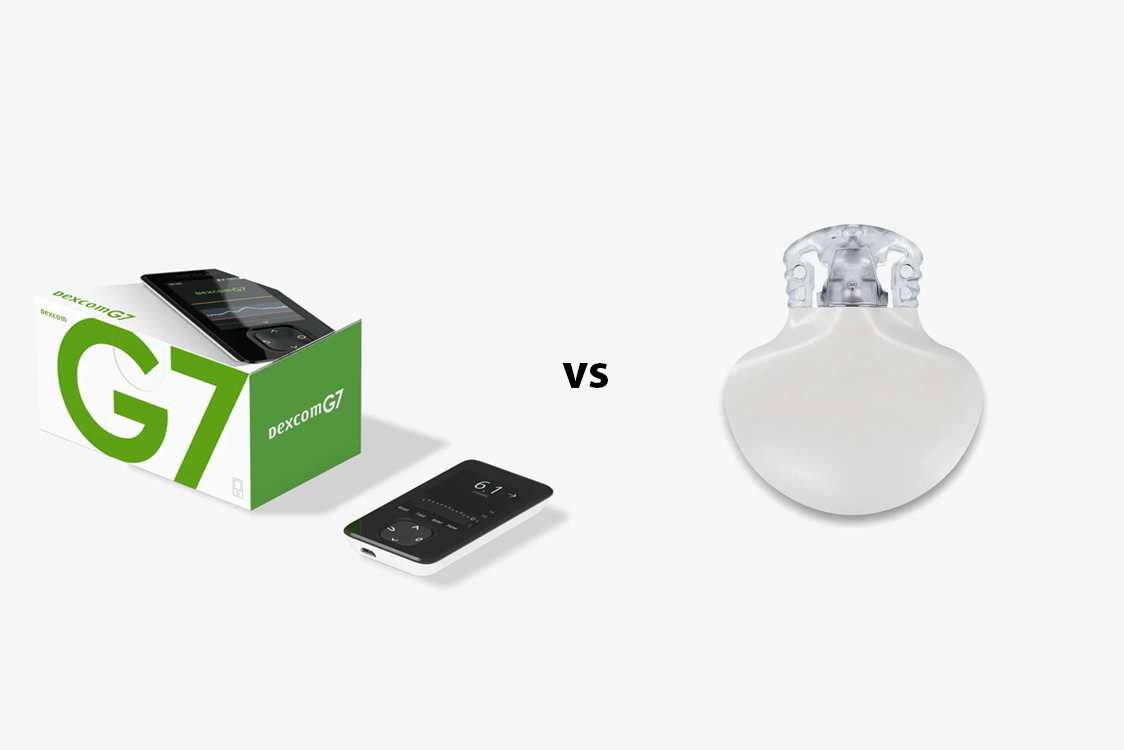
If you're comparing the Dexcom G7 and the Medtronic Guardian 4 sensor, there's one important thing to understand upfront: these two CGMs are designed to serve quite different purposes. The Dexcom G7 is a standalone CGM that works independently of any pump and can connect to a variety of devices and insulin delivery systems. The Guardian 4 sensor is designed exclusively to integrate with the Medtronic MiniMed 780G insulin pump system as part of a closed-loop AID setup. That distinction shapes virtually every other comparison between them. This guide breaks down the differences clearly so you can evaluate which approach fits your management needs.
Dexcom G7 vs. Guardian 4: Key Specs Side-by-Side
According to the ADA Consumer Guide and manufacturer specifications, here's how these two systems compare on the features that matter most:
| Feature | Dexcom G7 | Medtronic Guardian 4 |
|---|---|---|
| Sensor Wear Time | 10 days (plus 12-hour grace period) | 7 days |
| Reading Frequency | Every 5 minutes | Every 5 minutes |
| Calibration Required | None | None (when used with SmartGuard in MiniMed 780G) |
| Warm-Up Time | 30 minutes | Approximately 2 hours |
| Standalone Use | Yes (smartphone app or receiver) | No (requires compatible Medtronic pump) |
| Display Device | Smartphone, G7 receiver, or insulin pump | MiniMed 780G pump screen only |
| Insulin Pump Compatibility | Multiple (Tandem t:slim X2, Omnipod 5, others) | Medtronic MiniMed 780G only |
| Predictive Alerts | Yes (Urgent Low Soon alert) | Yes (up to 60 minutes in advance) |
| Data Sharing | Yes (Dexcom Follow app, Clarity) | Yes (CareLink Connect app) |
| Approved Ages | Ages 2+ (G7) | Ages 7+ |
| Insertion Site | Upper arm, abdomen (adult); upper buttock (ages 2-6) | Back of upper arm |
Dexcom G7: Standalone Flexibility and Broad Compatibility
The Dexcom G7 is a fully standalone CGM. It works independently of any insulin pump and sends readings every five minutes to a compatible smartphone or the dedicated G7 receiver. It can also be paired with compatible insulin pump systems including the Tandem t:slim X2 with Control-IQ and Omnipod 5 for automated insulin delivery.
Clinical accuracy data published in PubMed Central established the G7's MARD at 8.2% for arm placement in adults, with a 12-hour grace period at the end of each 10-day sensor session to give users more time before replacement. The warm-up period is just 30 minutes, the shortest of any current CGM. The G7 stores up to 24 hours of historical data, reducing gaps in your record if you're temporarily out of range of your display device.
The G7's alert system is highly customizable. Users can set personalized thresholds for high and low glucose, enable an Urgent Low Soon predictive alert, and share live data with up to 10 followers through the Dexcom Follow app. A study published in PubMed Central comparing multiple CGM systems found that both the G7 and FreeStyle Libre 3 demonstrated consistent accuracy across glucose ranges, with both meeting FDA iCGM accuracy criteria.
For Medicare users, the G7 requires use of the dedicated receiver (not just a smartphone) to qualify for Part B coverage. The receiver is available separately through Adapt Health Diabetes.
Guardian 4: Purpose-Built for the MiniMed 780G Closed-Loop System
The Guardian 4 sensor with transmitter kit is not a general-purpose CGM. According to the ADCES, it is designed exclusively for use with the Medtronic MiniMed 780G automated insulin delivery system. It does not connect to a smartphone app for real-time glucose display and cannot be used independently of a compatible Medtronic pump. If you're evaluating the Guardian 4 as a standalone CGM option, it's not designed for that use case.
Within the MiniMed 780G system, the Guardian 4 is a powerful component. It provides calibration-free readings every five minutes directly to the pump's SmartGuard algorithm, which uses that data to make automatic basal adjustments and correction boluses every five minutes. The Guardian 4 also offers predictive alerts up to 60 minutes in advance for high and low glucose, which gives the system meaningful lead time to respond before glucose reaches a dangerous level.
The wear time for the Guardian 4 is 7 days per sensor, shorter than the Dexcom G7's 10-day session. The warm-up period of approximately 2 hours is also longer. These factors mean more frequent sensor changes and longer gaps in automated mode when switching sensors, which is worth factoring in if daily management disruption is a concern.
The MiniMed 780G system using the Guardian 4 was evaluated in the ADAPT randomized controlled trial, which found a 27.6% increase in time in range and a 1.4% reduction in HbA1c compared to multiple daily injections with an intermittently scanned CGM, with even greater overnight improvements. These outcomes reflect the integrated system's performance as a whole, not the sensor in isolation.
Which Approach Is Right for You?
The decision between the Dexcom G7 and the Guardian 4 often comes down to whether you're choosing a CGM independently or choosing an entire insulin pump ecosystem. If you want a standalone CGM that works across multiple pump platforms, connects directly to your phone, and gives you full flexibility in device choice, the Dexcom G7 is the right tool. If you're specifically interested in the Medtronic MiniMed 780G closed-loop system and its meal detection automation, the Guardian 4 sensor is the integrated partner that makes that system function. They serve different goals, and understanding that distinction makes the comparison much clearer. Visit our Learning Center and Education page for more guides on choosing between CGM and pump systems.
Frequently Asked Questions About Dexcom G7 and Medtronic Guardian 4
Can I use the Guardian 4 sensor with any pump other than the MiniMed 780G?
No. The Guardian 4 sensor is designed exclusively for use with compatible Medtronic insulin delivery systems, specifically the MiniMed 780G. It does not function as a standalone CGM and cannot be paired with other pump brands or used without a compatible Medtronic pump. If you're using a non-Medtronic pump, the Dexcom G7 or a FreeStyle Libre sensor would be the appropriate CGM options to explore.
Does the Dexcom G7 work with the Medtronic MiniMed 780G pump?
No. The MiniMed 780G requires a Guardian sensor (Guardian 3 or Guardian 4) to function in automated SmartGuard mode. The Dexcom G7 is compatible with the Tandem t:slim X2 and Omnipod 5 systems, among others, but not with Medtronic pumps. If you're deciding on a pump and CGM together, CGM compatibility is one of the most important factors to confirm before choosing a system.
How does the warm-up time difference affect daily management?
The Dexcom G7's 30-minute warm-up is the shortest of any current CGM, meaning when you change sensors you're back in automated mode or monitoring more quickly. The Guardian 4's approximately 2-hour warm-up means the MiniMed 780G is not in SmartGuard automated mode during that window, reverting to manual basal delivery. For people who prefer to change sensors overnight to minimize disruption, planning the timing of changes can reduce the practical impact. Your diabetes care team can help you build a sensor rotation strategy that works for your schedule.
Which system has better predictive low alerts?
Both systems offer predictive low alerts, but with different lead times. The Guardian 4 can alert up to 60 minutes before a predicted low, which is a longer predictive window than the Dexcom G7's Urgent Low Soon alert. That longer window can be meaningful for people with hypoglycemia unawareness or frequent overnight lows, as it gives more time to act before the low occurs. The tradeoff is that longer predictive windows can also generate more false alarms in some individuals, which is worth discussing with your care team.
Does insurance cover both systems?
Both the Dexcom G7 and the Guardian 4 (as part of the MiniMed 780G system) are covered by most private insurance plans, Medicare, and many Medicaid programs for eligible patients. Because the Guardian 4 is typically billed as part of the MiniMed 780G system rather than as a standalone CGM, coverage terms may apply differently than for standalone CGMs. Prior authorization is common for both. Our team at Adapt Health Diabetes can help verify your coverage and walk you through what's needed.
Find the Right CGM and Pump System for Your Needs
Adapt Health Diabetes carries both the Dexcom G7 sensor and the Guardian 4 transmitter kit, along with the full Medtronic and Dexcom product lineups. Visit our Resources page for more information, or contact our team to discuss your options and verify your coverage.
This article is for educational purposes only and does not replace professional medical advice. Always consult your healthcare provider regarding device selection and diabetes management decisions.
Sources
- American Diabetes Association. Guardian 4 Sensor with Guardian 4 Transmitter. ADA Consumer Guide.
- Bhargava A, et al. Accuracy and Safety of Dexcom G7 Continuous Glucose Monitoring in Adults with Diabetes. PubMed Central. 2022.
- Freckmann G, et al. Performance of Three Continuous Glucose Monitoring Systems in Adults with Type 1 Diabetes. PubMed Central. 2025.
- American Association of Diabetes Care and Education Specialists. FDA Approves Medtronic MiniMed 780G System. danatech by ADCES. 2023.


