


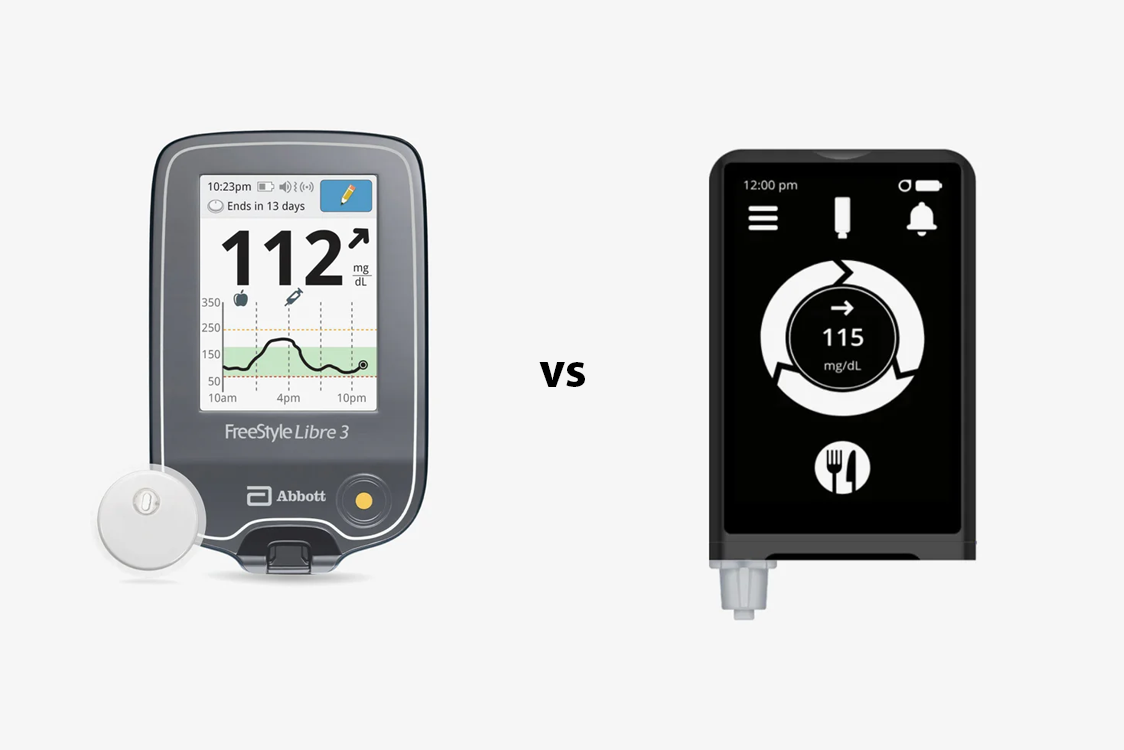
If you're already using a FreeStyle Libre sensor and keep hearing about the newer Libre 3, or if you're starting fresh and trying to decide which version to get, this guide is for you. The FreeStyle Libre 2 and FreeStyle Libre 3 are both excellent CGMs from Abbott, and they share quite a bit in common. But there are meaningful differences in size, data transmission, accuracy on the Plus versions, and pump compatibility that are worth understanding before you choose. Here's what you need to know.
Libre 2 vs. Libre 3: Key Differences at a Glance
Both devices are manufactured by Abbott and share the same basic sensor placement (back of the upper arm), wear approach, and LibreView data management platform. According to the ADA Consumer Guide, here's how the two generations compare:
| Feature | FreeStyle Libre 2 / Libre 2 Plus | FreeStyle Libre 3 / Libre 3 Plus |
|---|---|---|
| Sensor Wear Time | 14 days (Libre 2); 15 days (Libre 2 Plus) | 14 days (Libre 3); 15 days (Libre 3 Plus) |
| MARD (Accuracy) | 9.2% adult (Libre 2); 8.2% adult (Libre 2 Plus) | 8.9% adult (Libre 3); 8.2% adult (Libre 3 Plus) |
| Data Transmission | Continuous; requires scan for display (Libre 2) | Continuous and automatic every minute (Libre 3) |
| Reading Update Frequency | Every minute (measures); requires scan to view | Every minute, pushed automatically to phone |
| Real-Time Alerts | Optional (without scanning) on Libre 2 | Yes, optional on both Libre 3 and Libre 3 Plus |
| Sensor Size | Larger sensor profile | Over 70% smaller than Libre 2 |
| Insulin Pump Compatible | Libre 2 Plus only | Yes (Libre 3 and Libre 3 Plus) |
| Approved Ages | Libre 2: ages 4+; Libre 2 Plus: ages 2+ | Libre 3: ages 4+; Libre 3 Plus: ages 2+ |
| Receiver Option | Yes (Libre 2 reader) | Yes (Libre 3 reader) |
| Pregnancy Approval | Yes | Yes |
| Calibration Required | None | None |
The Most Important Upgrade: How Data Gets to Your Phone
The single most meaningful difference between the Libre 2 and Libre 3 is how glucose data is delivered to your phone. Understanding this distinction helps clarify why the Libre 3 represents a genuine generational step forward, not just a cosmetic update.
The FreeStyle Libre 2 measures glucose every minute and stores that data continuously, but to actually see your reading, you need to scan the sensor by bringing your phone or reader within range of it. The sensor does push optional real-time alerts for high and low glucose without a scan, which is a meaningful safety feature. But your full glucose display, trend arrows, and graph still require an active scan.
The FreeStyle Libre 3 changes this fundamentally. It transmits glucose readings to your phone automatically every minute, in real time, without any scanning action required. Your current glucose, trend arrow, and history are always up to date on your phone, functioning more like a traditional real-time CGM such as the Dexcom G7. This shift from scan-based to automatic transmission is the core reason the Libre 3 is often described as a true real-time CGM, where the Libre 2 is technically classified as an intermittently scanned CGM with optional real-time alarm capability.
For most day-to-day users, this difference matters because you'll always have current data visible at a glance without needing to remember to scan. For anyone integrating their CGM with an insulin pump for automated delivery, the Libre 3's continuous automatic transmission is also a functional requirement for most AID system compatibility.
Accuracy, Sensor Size, and When Pump Compatibility Matters
On accuracy, the standard Libre 2 and Libre 3 carry slightly different MARD scores (9.2% and 8.9% respectively for adults), according to the ADA Consumer Guide. Both are well within the clinically acceptable range for treatment decisions. The Plus versions of both sensors, the Libre 2 Plus and Libre 3 Plus, both carry an 8.2% MARD, putting them on equal footing for accuracy and both offering 15-day wear. For most users, the accuracy difference between generations is not the deciding factor.
Sensor size is another area where the Libre 3 has improved significantly. The Libre 3 sensor is over 70% smaller than the Libre 2, making it more discreet and comfortable for extended wear. This is particularly meaningful for people who found the Libre 2 noticeable under clothing or uncomfortable during sleep.
Pump compatibility is a significant practical consideration if you use or are considering an insulin pump. The Libre 3 and Libre 3 Plus are compatible with insulin pump systems that support Abbott's CGM integration, including the Tandem t:slim X2 with Control-IQ. The standard Libre 2 is not pump-compatible. The Libre 2 Plus does have iCGM status enabling AID compatibility, but the Libre 3 generation has broader current support. If automated insulin delivery is part of your current or future plan, the Libre 3 Plus is the more future-ready choice.
Which Version Makes Sense for You?
For most users, the Libre 3 represents a meaningful quality-of-life improvement over the Libre 2, particularly because of automatic data transmission and the smaller sensor footprint. If you're an existing Libre 2 user wondering whether to upgrade, the answer is generally yes, especially if you want current glucose data always visible without scanning, or if you're moving toward pump integration. If you're newer to CGM and primarily want a reliable, cost-effective monitoring option with optional alerts and good accuracy, either the Libre 2 Plus or Libre 3 Plus will serve you well. Your prescriber can confirm which version is appropriate for your situation and what your insurance plan covers. Visit our Learning Center for more guides on Abbott FreeStyle Libre devices and how to get the most from your CGM.
Frequently Asked Questions About FreeStyle Libre 2 vs. FreeStyle Libre 3
If I'm currently on the Libre 2, do I need a new prescription to switch to the Libre 3?
Yes. Switching from the Libre 2 to the Libre 3 requires an updated prescription specifying the new device, and your insurance may need to be re-verified for the new sensor. The process is typically straightforward, especially if you're already an established patient with an active CGM prescription. Your provider's office and your DME supplier can coordinate the transition without a full re-authorization in most cases.
Can I use the Libre 2 reader with Libre 3 sensors?
No. The Libre 2 reader is not compatible with Libre 3 sensors. Each reader is designed for its corresponding sensor generation. If you're upgrading to the Libre 3, you'll need the compatible Libre 3 reader if you prefer a standalone device over using the smartphone app. Both readers are available through Adapt Health Diabetes.
Does the Libre 3 require a smartphone to use?
The Libre 3 can be used with either a compatible smartphone running the Libre app or the dedicated reader device. Unlike the Libre 2, which requires a scan to display readings, the Libre 3 pushes data automatically, so a smartphone or reader needs to be within Bluetooth range (approximately 33 feet) to receive the continuous transmissions. If you're in range and the app is running, your data updates without any interaction.
Is the Libre 3 covered by Medicare?
The FreeStyle Libre 3 is covered by Medicare for eligible beneficiaries under Part B as durable medical equipment. Coverage requires a diabetes diagnosis, insulin use or documented history of problematic hypoglycemia, and a valid prescription. Medicare also requires the use of a compatible standalone reader for coverage to apply, as Medicare does not cover CGMs used only with a smartphone. Confirm your specific coverage details with our team before ordering.
Which version is better for children?
Both the Libre 2 Plus and Libre 3 Plus are approved for children as young as age 2, while the standard Libre 2 and Libre 3 are approved for ages 4 and older. The smaller sensor footprint of the Libre 3 makes it more comfortable for younger users. For children who may benefit from pump integration now or in the future, the Libre 3 Plus is the more compatible option. Your child's pediatric endocrinologist can help determine the best fit.
Order Your FreeStyle Libre Supplies Through Your Insurance
Adapt Health Diabetes carries sensors for both the FreeStyle Libre 2 Plus and FreeStyle Libre 3 Plus, along with compatible readers. We verify your insurance, handle the ordering process, and ship directly to your door. Browse our full Abbott FreeStyle product selection, or contact our team with questions about switching versions or verifying coverage.
This article is for educational purposes only and does not replace professional medical advice. Always consult your healthcare provider regarding device selection and diabetes management decisions.
Sources
- American Diabetes Association. FreeStyle Libre 2 and FreeStyle Libre 2 Plus. ADA Consumer Guide.
- American Diabetes Association. FreeStyle Libre 3 and FreeStyle Libre 3 Plus. ADA Consumer Guide.
- American Association of Diabetes Care and Education Specialists. FreeStyle Libre 2 Features. danatech by ADCES.


